RoboCar (TriClops)
TriClops
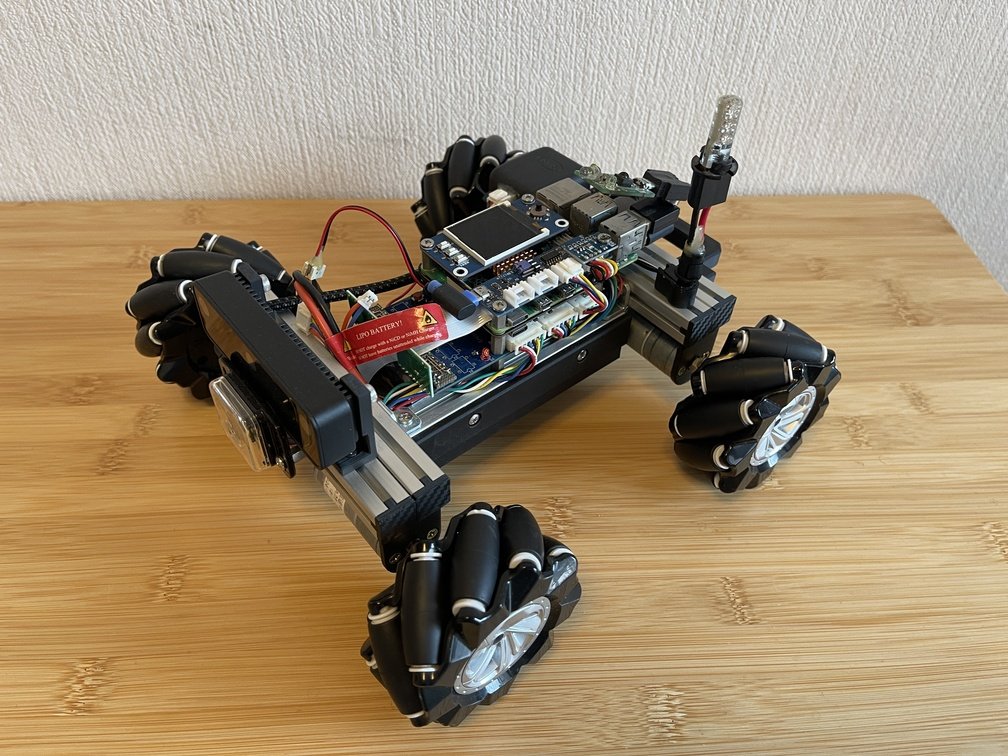
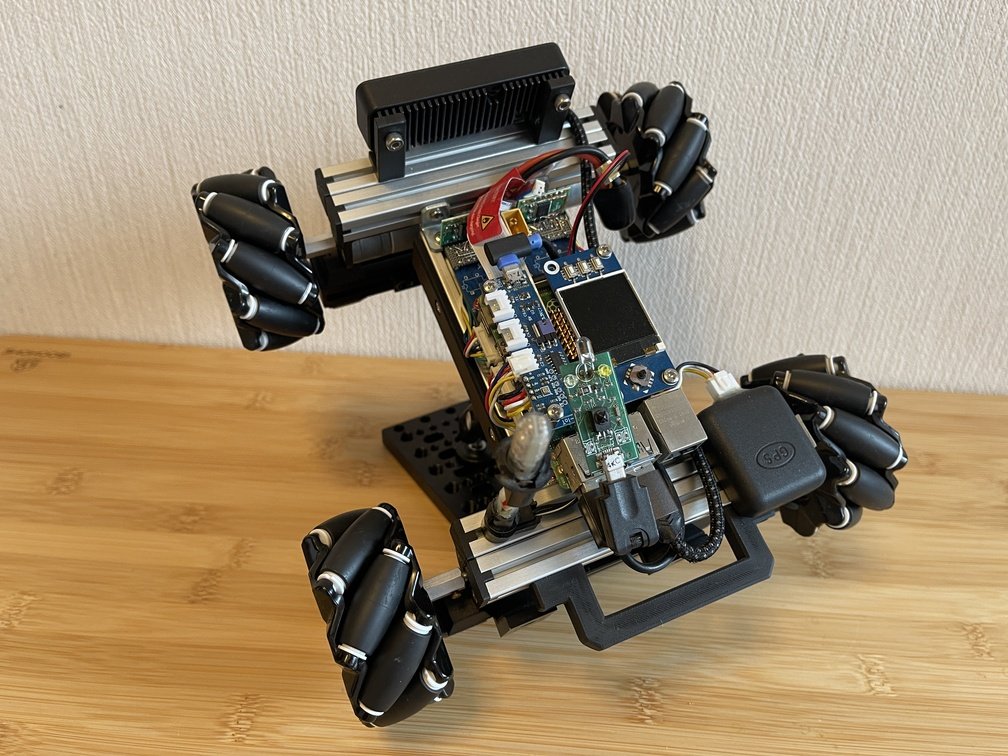
| Front left | On the platform | Three Eyes (Three-Eyed) |
|---|---|---|
 |
 |
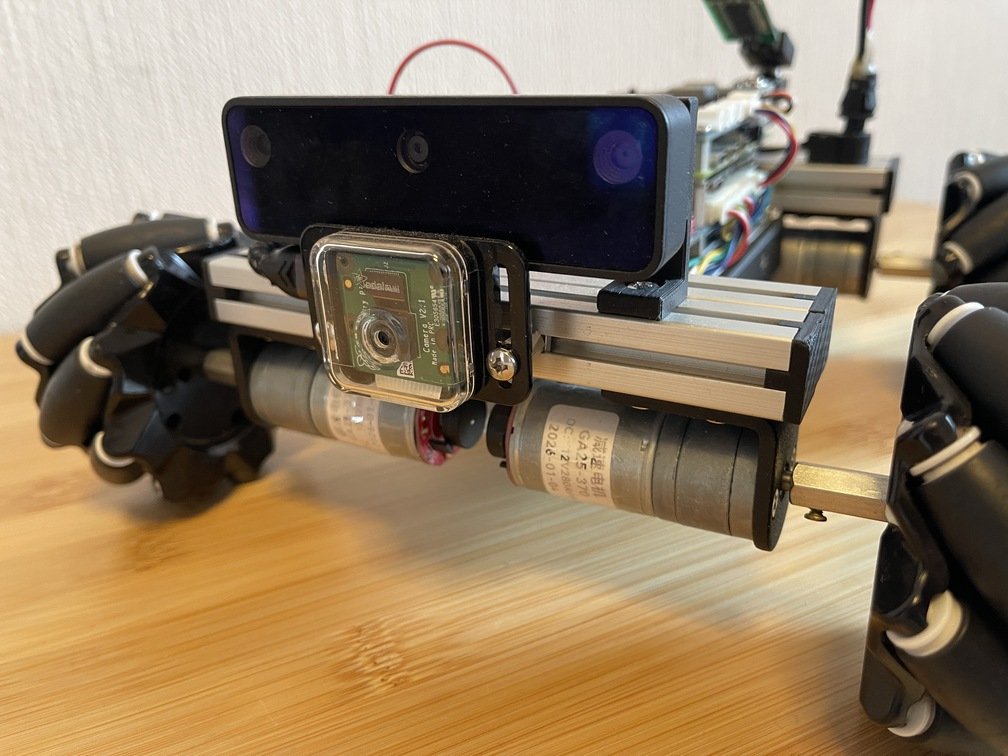 |
| Bird’s-eye view from the upper left front | A view of it mounted on a stand (horse) | The camera sensors consist of a monocular camera and a stereo camera. |
Rover Sometimes I call it “RoboCar,” or when it’s a single-lens camera, “Cyclops,” or when it’s a Raspberry Pi camera paired with “Oak D-Lite,” “TriClops”… Now that it has three lenses, it’s “TriClops.” One thing I can say about this project is that it’s the largest in scale and has the biggest budget of any DIY project I’ve worked on, including my electronics projects. It also incorporates a wealth of the various projects I’ve developed so far. As for its current form, let’s call it “TriClops-RoboCar.”
Robots Are an Engineer’s True Calling
Generally speaking, anyone who calls themselves an engineer wants to present some kind of work to the world. Well, since I can do that through my job, that’s fine, but I also want to do it with things I want to create myself. In my case, this is what fits the bill for now.
Modular Structure
Here, we will explain the current robot configuration by breaking it down into the following modules:Mechanics, Hardware, and Software. Since each module covers a considerable amount of material, please feel free to ask questions at AI as needed to deepen your understanding. The key to implementing a large system is to tackle it one part at a time. Perform thorough unit testing to ensure stability, then integrate the components, and finally perform adjustments and fine-tuning as necessary.